
In this article (3min read):
- The trends we’ve seen with greenfield community lead generation since 2022 across Google and Meta advertising platforms
- Why January is such a good month to generate leads for our property clients
- What you can do now to prepare for January’s advertising
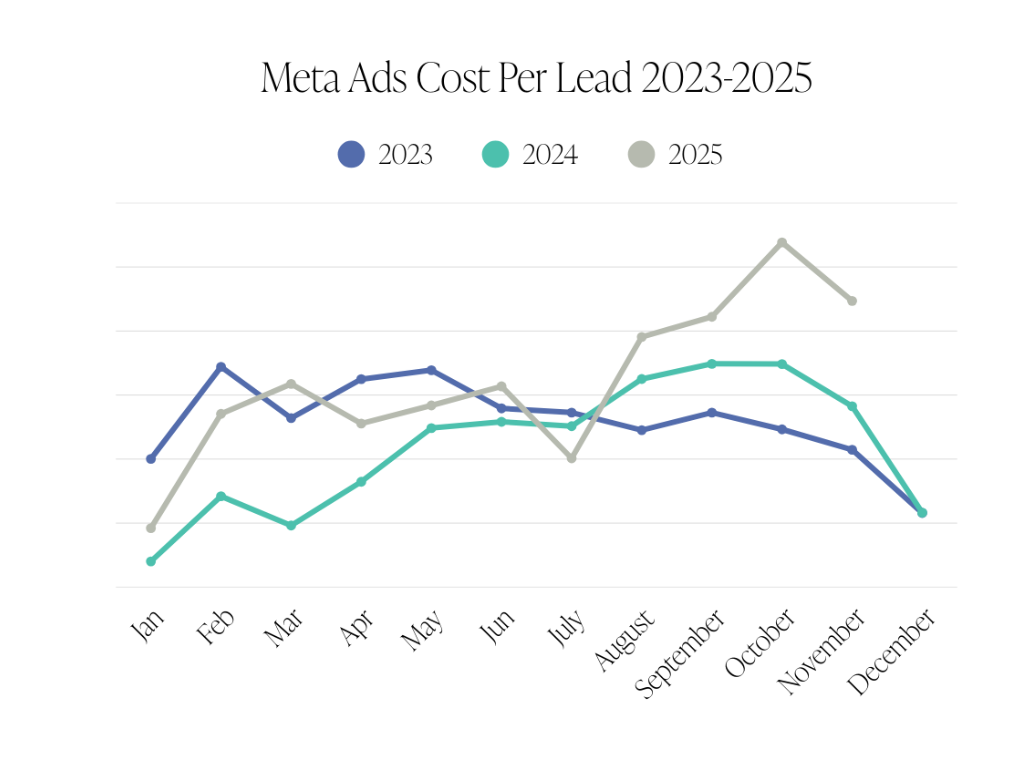
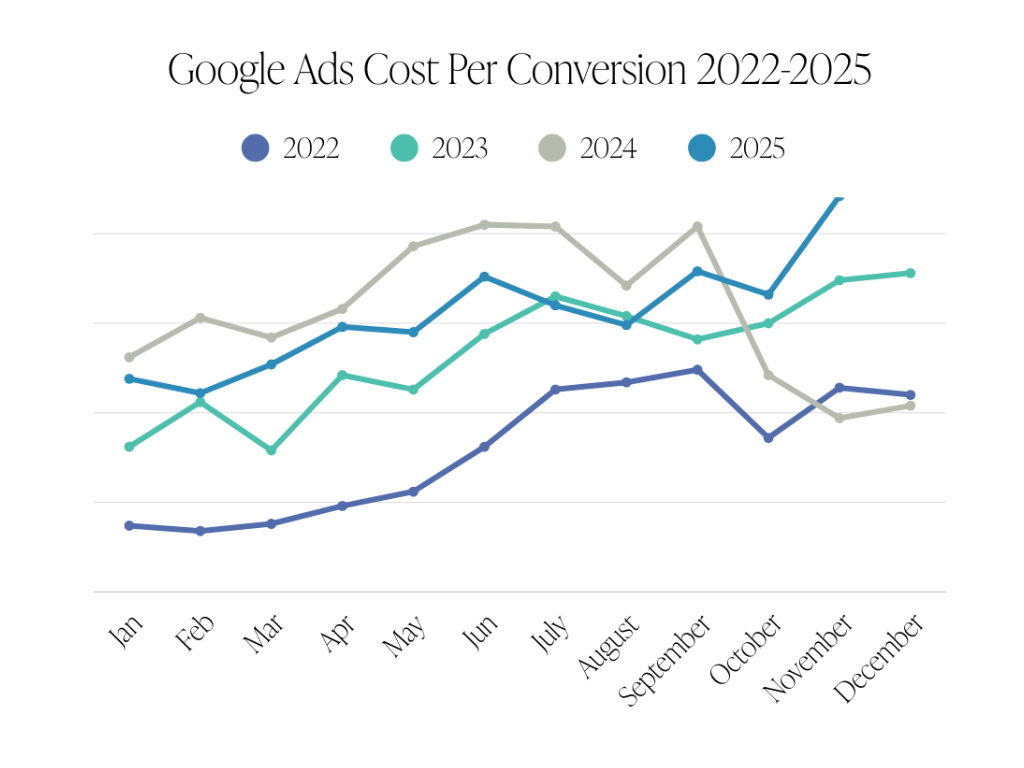
We reviewed our average cost per conversion on Google from 2022-2025, and average cost per lead on Meta from 2023-2025. And when we compared January’s results to the rest of the months of the year a clear trend emerged.
Cost per lead trends from 2022-2025
Since 2022, January has been the highest performing month of lead generation for our property clients across our Google and Meta ad accounts.
Since 2022 the average Google cost per conversion in January has been 31% lower than the average of the remaining months of the year.
On Meta, January’s average Meta Cost Per Lead has been 24% lower that then remaining months of the year.
In addition to this, it has consistently been the most, or second most, efficient lead generating month in the calendar year. This includes better results than the traditional Spring boom in the property market – where it is customary to launch campaigns and increase advertising spend.
In previous years many of our clients have recognised this trend and increased advertising spend to capitalise on this opportunity.
Four reasons why property lead generation is so effective in January:
- Most people enjoy time off work in December/January. After the initial Christmas frenzy, we spend more time relaxing. Without having to work each day we have more time to watch TV and scroll on our phones. Consuming more media means consuming more advertising, and allows savvy advertisers to generate revenue from this increased attention.
- January and the New Year are associated with fresh beginnings and goal setting. People set New Year’s resolutions, reflect on the previous year and set goals (however loosely) for the upcoming year. Buying a house is a significant life event and is likely to be included in these larger goal setting moments.
- With time off work many people travel to different places and visit friends and family. Spending time in other peoples homes can spark house envy, where a friend’s ability to successfully host, or their own failed attempt to do so, prompt people to consider buying a new house.
- Less advertising competition as retailers (who compete for advertising space to sell their goods to similar audiences) reduce spend after the Black Friday and Christmas sales period through November/December.
What smart advertisers can do to prepare to capitalise on Summer holiday spending
- Don’t slow down in December! Use the remaining days to prepare proactive campaigns and increased advertising spend
- Campaigns need to be noticed to be effective. Aim to be the boldest version of your brand by investing in quality creative. Campaigns with poor creative cost you more money through poor performance than they save in creative costs
- Consider increasing budgets to capitalise on a more receptive advertising audience. Just like a good investment strategy it makes sense to ‘buy’ leads when they’re priced low.
In summary
If the trend seen in the past three years continues again in 2026, savvy advertisers stand to gain if they buck the industry trend of winding down over Summer holidays and instead increase their advertising presence.
Would you rather start 2026 off with a bang, or concede an advantage to one of your competitors who does?
IvyStreet offer creative, marketing and web solutions and manage campaigns end-to-end from creative concepts through to digital marketing execution and roll-out. If you’d like to learn more, reach out